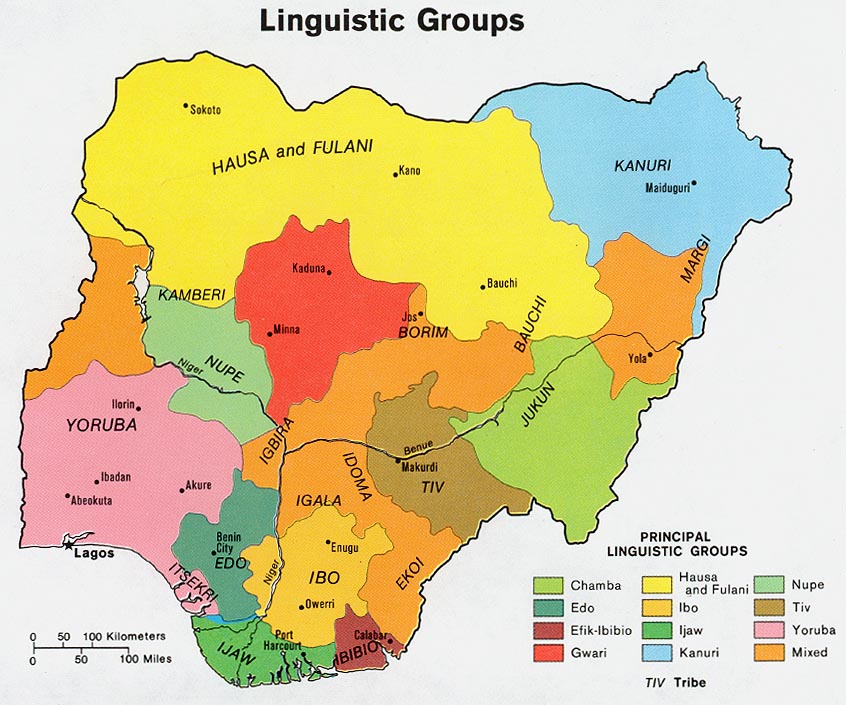
The Boga are a Chadic-speaking people living in the rugged terrain of Gombi Local Government Area in Adamawa State, northeastern Nigeria. Adamawa is among the most ethnically diverse states in the nation, home to more than one hundred indigenous groups, and the Boga are part of this remarkable mosaic. They share deep linguistic and cultural kinship with the neighboring Ga'anda people, who regard the Boga as one of four related clan groups, all tracing their origins to a common migration from the region of Lake Chad in what is now Borno State. According to oral tradition, these ancestral clans traveled westward under the guidance of sacred objects and settled after a long journey through the highlands, with Ga'anda town serving as the traditional administrative and spiritual center of the wider regional community.
The Boga language belongs to the Biu-Mandara branch of the Afro-Asiatic Chadic language family and has a writing system developed in Latin script. Bible portions were published in Boga as recently as 2025, a New Testament is available through YouVersion, and audio gospel recordings are accessible through Global Recordings Network. These are signs of God's grace already moving among this people, even as so much remains to be done.
Adamawa State's history was shaped profoundly by the Fulani jihad of the early nineteenth century, which swept through the region and brought most of it under the Emirate of Adamawa — a subordinate kingdom of the Sokoto Caliphate. The Boga and their neighbors in Gombi LGA have lived in the shadow of this history, and Islam entered the region through that legacy. More recently, Adamawa has suffered significant disruption from the Boko Haram insurgency, which attacked Gombi in 2012 and left lasting instability across the state.
The Boga are subsistence farmers whose lives follow the rhythm of the rainy and dry seasons. Sorghum (guinea corn), millet, maize, yams, and groundnuts are the backbone of both household nutrition and local trade. Animal husbandry — goats, cattle, and chickens — supplements farming income and provides for celebrations and family obligations. Fulfulde and Hausa serve as bridge languages connecting the Boga to the wider regional economy and neighboring peoples.
Family life is organized along patrilineal lines, with extended clan networks defining social identity and governing decisions about marriage, land, and community leadership. Young men and women pass through important rites of passage that mark the transition to adulthood: boys undergo a period of initiation known in neighboring Ga'anda communities as Sabta, a rigorous ordeal designed to produce strong, resilient members of the community, followed by a communal feast celebrating their passage. Girls traditionally go through stages of ceremonial body markings. The great Hombata harvest festival, celebrated in November, is the high point of the communal year — a time of singing, dancing, feasting, and thanksgiving that brings the whole community together as the crops come in.
Christianity is the primary religion of the Boga, and the presence of the gospel among this people is a testimony to the faithful work of missionaries and local believers over the past century. Churches have taken root in the community, and the New Testament is now available in the Boga language. Yet alongside Christian identity, traditional ethnic religion continues to hold real influence in Boga life. Beliefs in ancestral spirits, sacred objects, and the spiritual powers that govern rain, harvest, and communal welfare persist in many households, and the line between Christian profession and traditional practice is often blurred.
A smaller Muslim minority reflects the broader Islamic influence that spread across Adamawa through the emirate system. The evangelical witness in the community, while present, represents only a portion of those who call themselves Christian. The Boga who know and walk with the living God have a remarkable opportunity: to deepen the roots of genuine faith in their own community, and to carry the good news of Jesus Christ to the many unreached peoples living in other parts of Nigeria.
Access to quality healthcare, clean water, and education remains limited in rural Gombi LGA, and farming families face real food insecurity during years of poor rainfall or conflict-related disruption. The legacy of Boko Haram violence has left communities across Adamawa with wounds — displaced families, destroyed infrastructure, and a persistent atmosphere of fear — that require both practical rebuilding and deep spiritual healing.
The Boga community needs the gospel to move from Sunday identification into everyday discipleship; many who hold a Christian name have never experienced the transforming grace of Jesus Christ. Pastoral training and church-planting workers who can disciple Boga believers into mature, mission-minded faith would be of great value to this people and to the wider region.
Pray that the newly published Bible portions and the YouVersion New Testament in Boga would be eagerly read and heard, and that the Holy Spirit would use them to bring genuine conversion and lasting transformation in Boga families and communities.
Pray for the breaking of ancestral spiritual strongholds — that practices rooted in fear of spirits and devotion to sacred objects would give way to confident faith in the risen Christ who holds all authority.
Pray that Boga believers would catch a bold vision, rising up as sent ones to reach the many unreached Chadic and Adamawa peoples around them who have yet to hear the gospel in a meaningful way.
Pray for peace and recovery across Adamawa State — that communities still bearing the wounds of the Boko Haram insurgency would experience the healing, justice, and restoration that only God can bring.
Scripture Prayers for the Boga in Nigeria.
https://www.ethnologue.com/language/bvw
https://globalrecordings.net/en/language/bvw
https://www.bible.com/versions/4364
https://en.wikipedia.org/wiki/Adamawa_State
https://en.wikipedia.org/wiki/Gombi,_Nigeria
| Profile Source: Joshua Project |